观察式的设计切入

在最开始的第一版改造设计方案中,设计从功能角度出发,一方面强化公区与院子的关系,另一方面梳理出卧室、庭院、公区、院子四个简洁的功能总平面图底关系。与业主沟通了几次方案之后,业主认可强化生活与院子关系的核心策略,但希望我们的设计能更多地回应他们真正的生活习惯,让所有的空间吻合他们的需求和使用方式。于是,我们更注重去聆听和记录业主的生活方式,用观察式的方法切入设计。对我们而言,这次的宅基地改造并非一场建筑师炫技的空间实验。我们不是让业主来适应我们预设的生活方式,而是让房子自然而然地融入他们的日常生活。

 
延续村集体的文化脉络

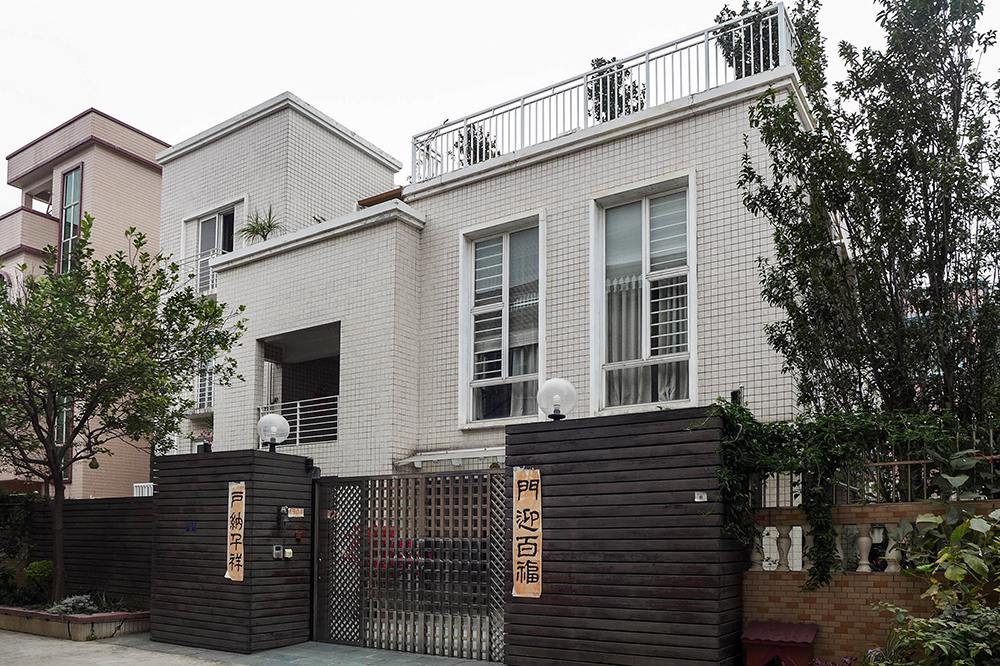
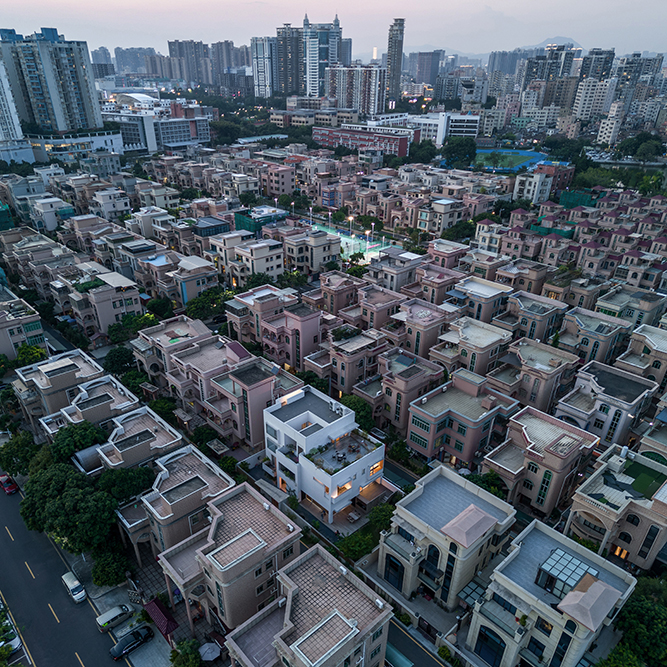
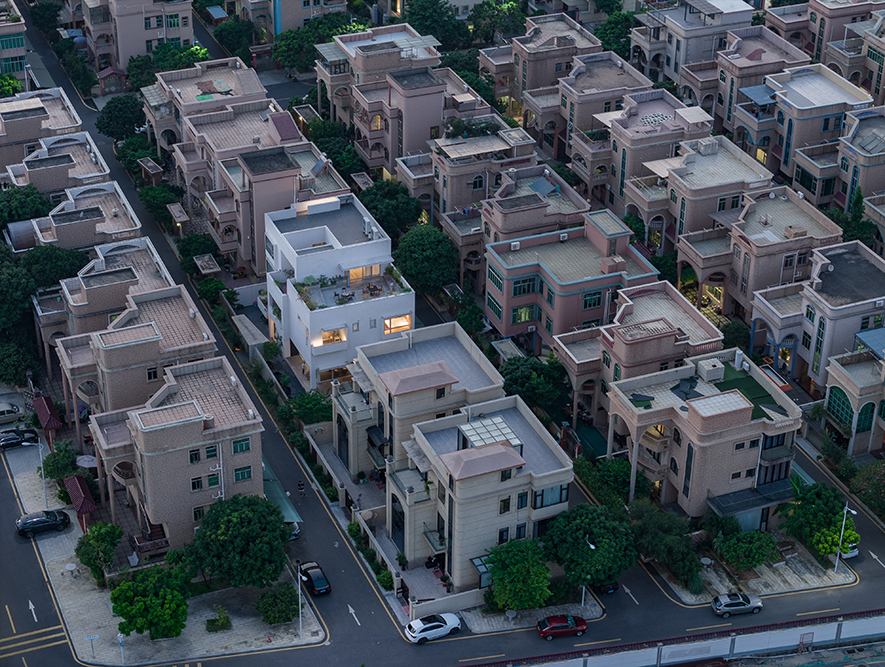
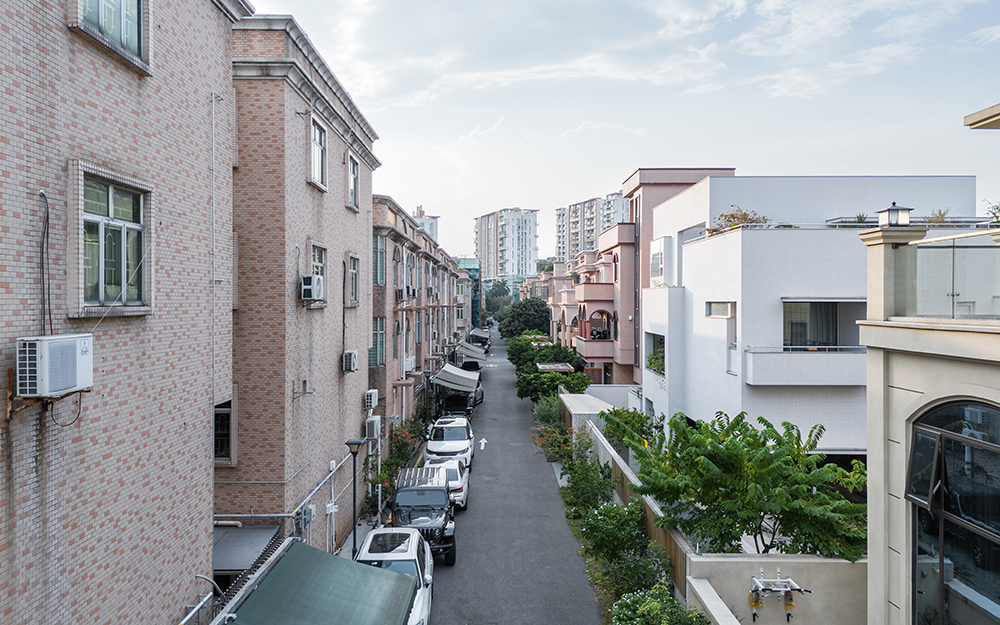
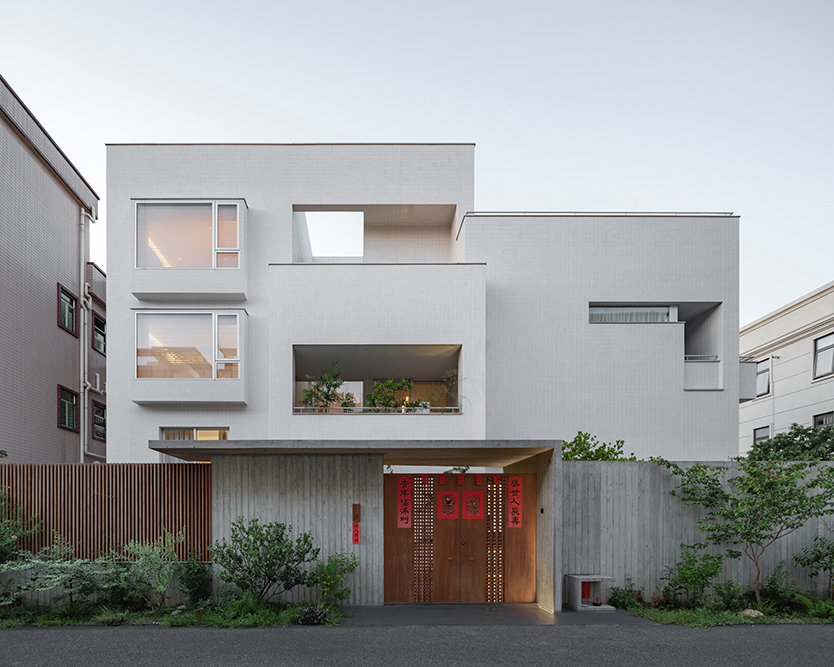
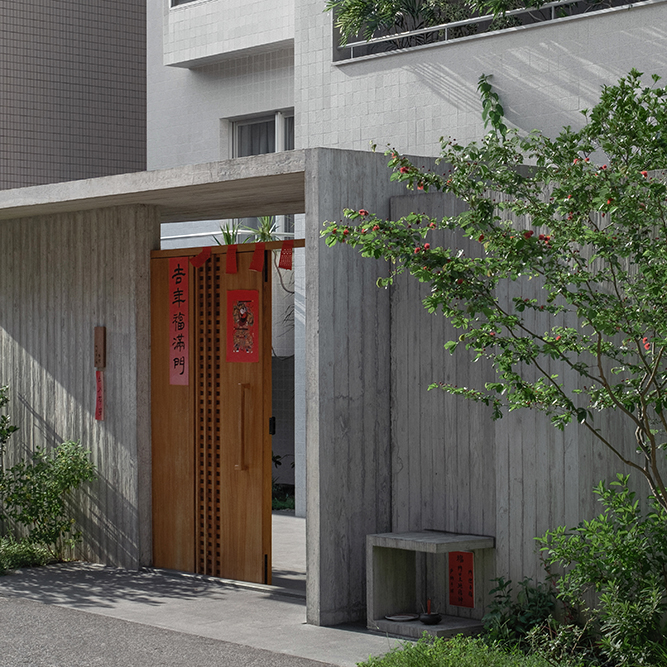
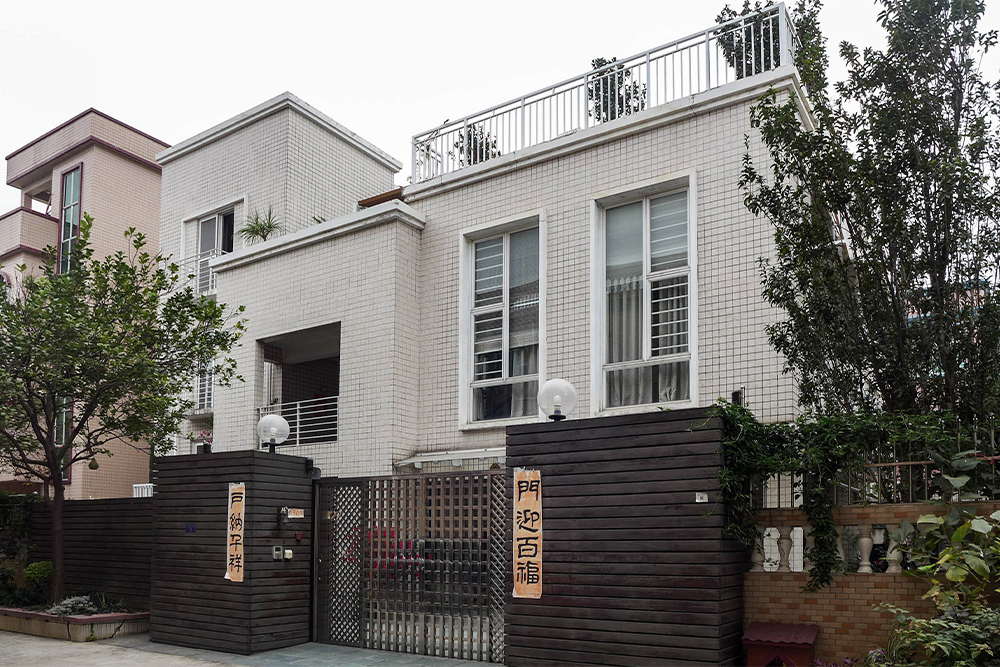
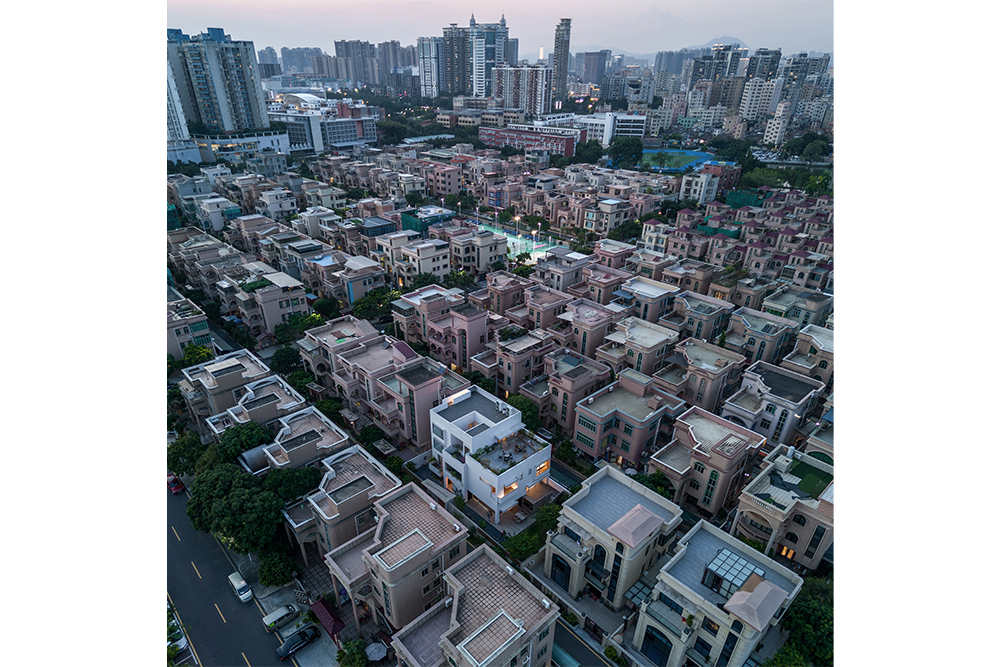
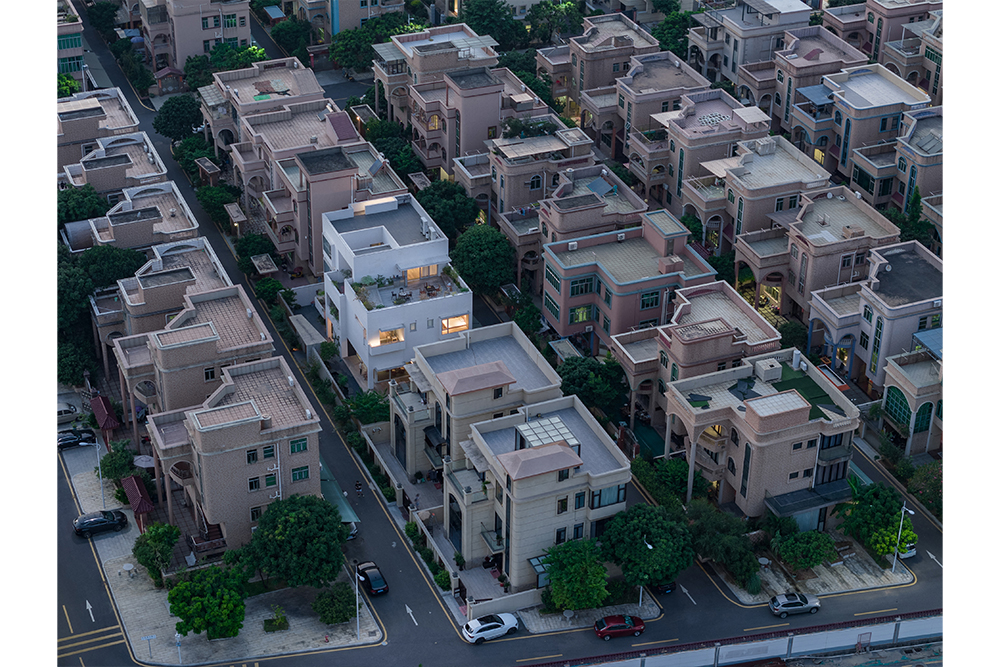
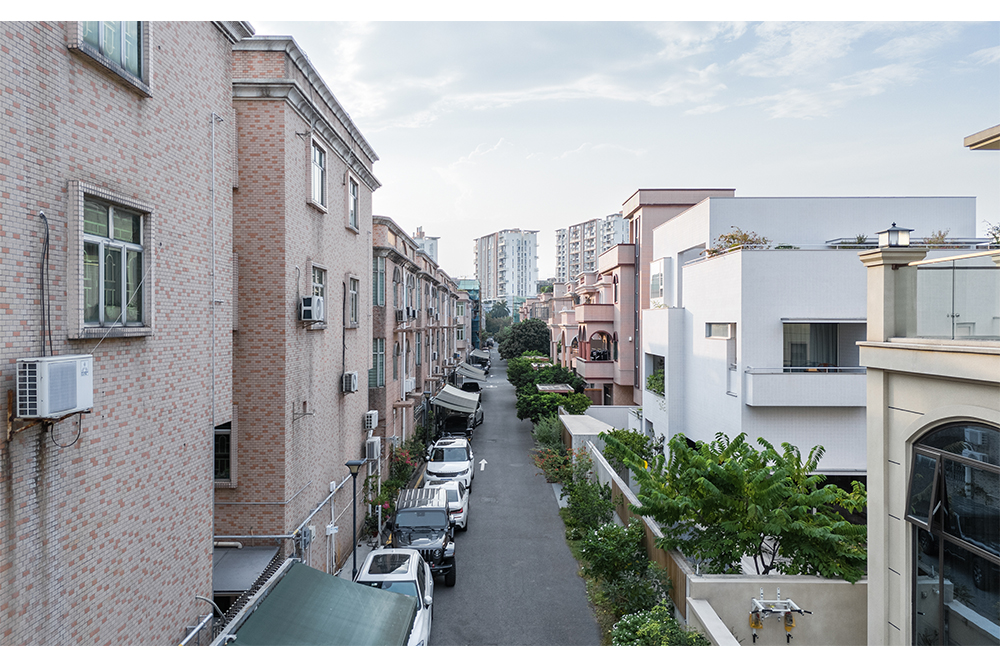
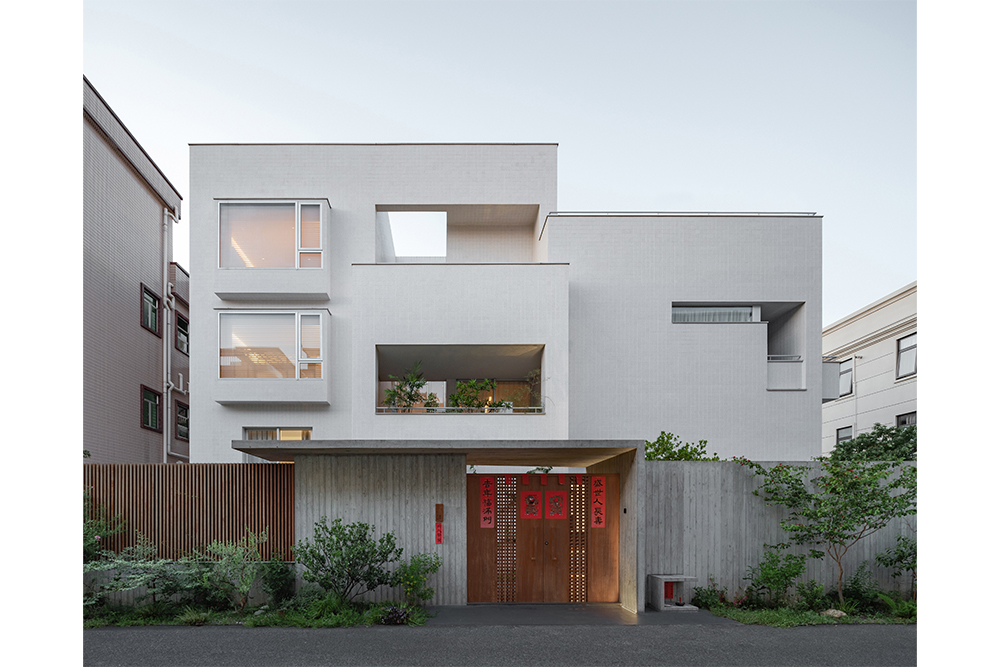
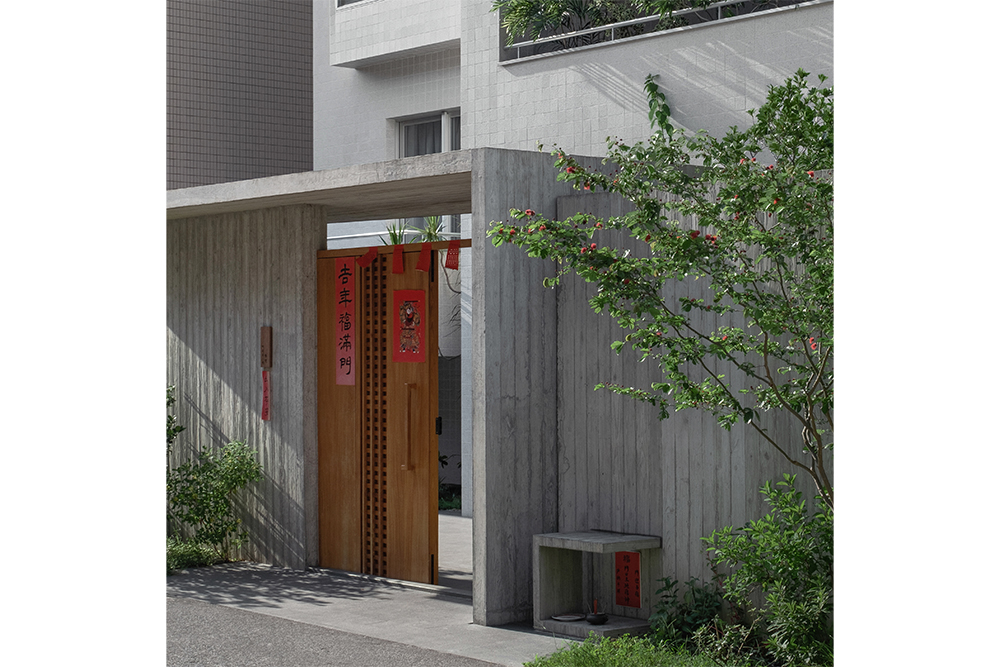
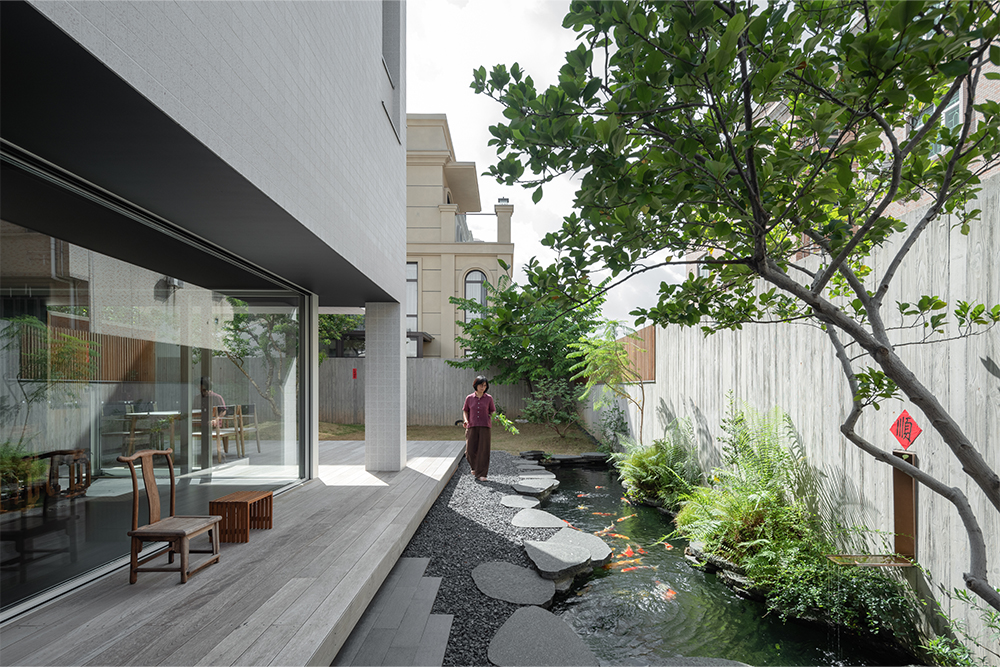
新村的规划布局整齐划一,每块宅基地的门口朝南布置,每一户都有完整的围墙界定私宅范围,并且私宅入口都设有一个入口小院。在这样的效率先行的冰冷规划空间里,私宅的边界围墙反而能映射出村集体文化脉络。围墙成为了每一户日常生活与文化的展示面。墙外,因喜好不同,有人饲养家禽,有人种植果树。而共性的是,每一家的大门都呈现出对传统习俗的守护,不仅在入户大门贴年红,并且在宅前左前方供奉土地公。女主人爱好园艺,因此设计将围墙外的绿景留白,让她去打造成属于自己的小天地。这道窄窄的绿景不仅展示着她的爱好与审美,她平时对植物的日常照料也成为与邻里交谈和寒暄的契机。

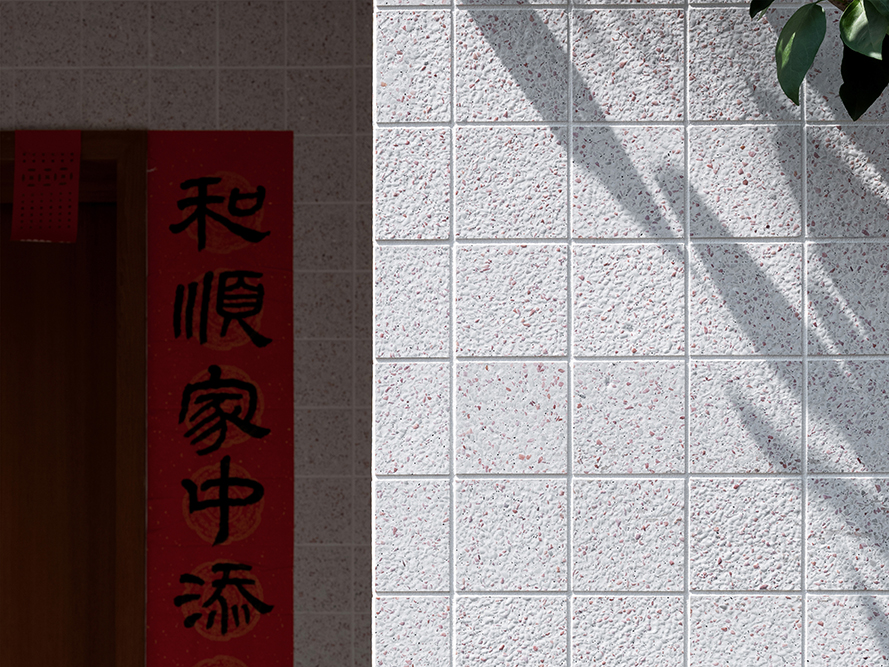
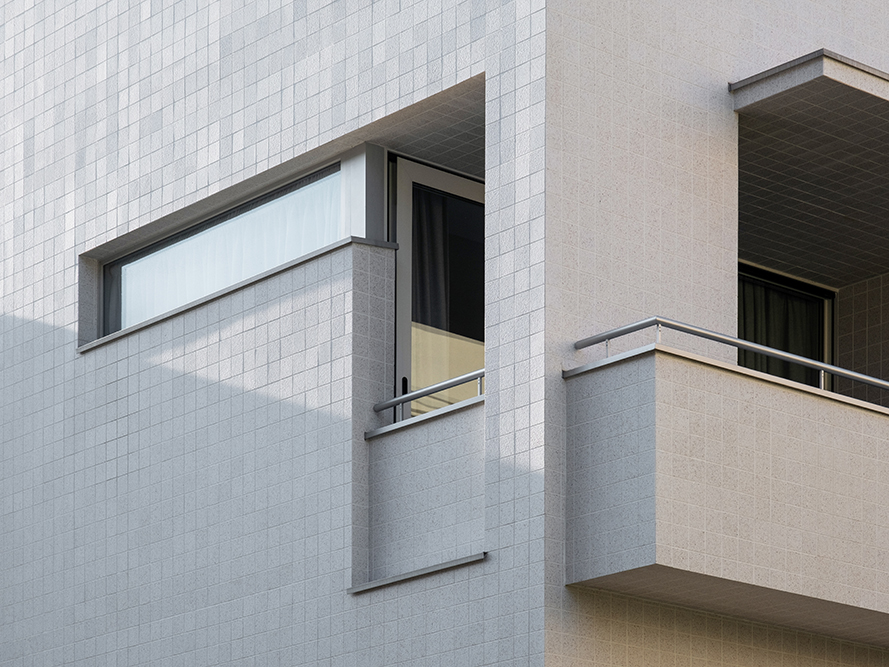
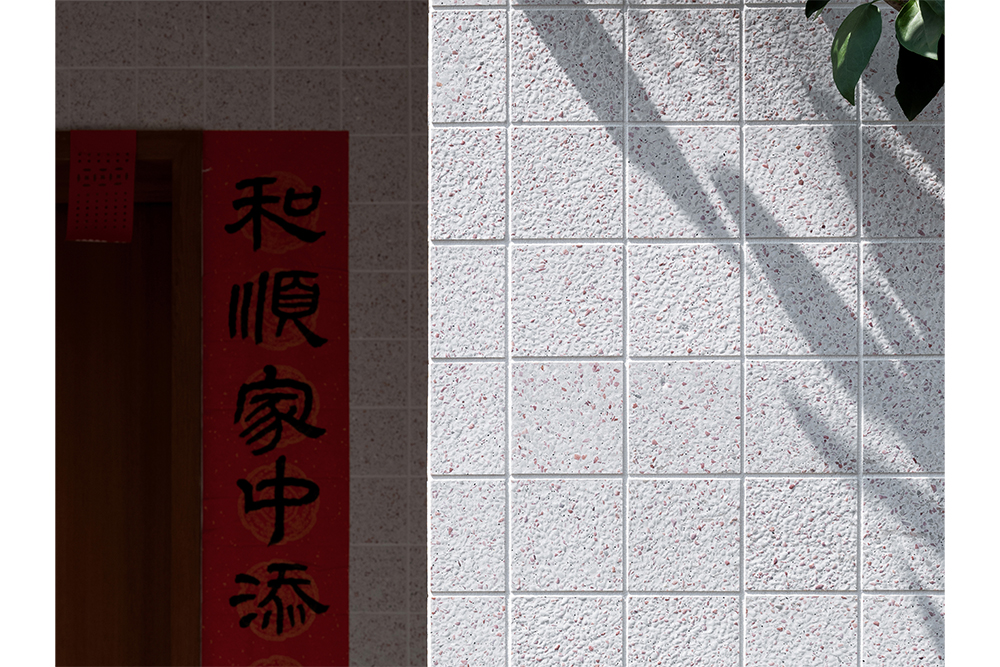
除此之外,新村的宅基地外墙清一色地采用了10*10cm的瓷砖,以粉色和土黄色为主。为了与周边呼应,外墙的材料也采用了10*10cm的规格,但没有用常规的瓷砖,而是选用了掺有粉红色石子的预制水磨石,而预制水磨石里白水泥的运用让建筑和室内形成材料色彩的自然过渡。同时,粉红色石子也让建筑略带一些粉红的底色,在近人尺度下体现丰富的材料细节。

 
村厅与家厅

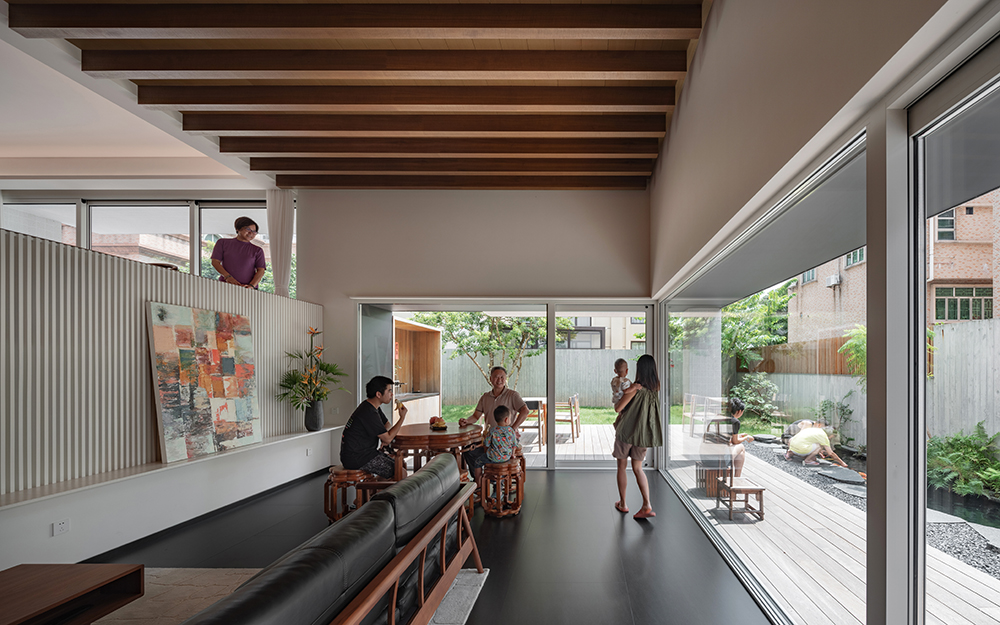
业主热情好客,人缘也广。每次在他家客厅讨论设计方案时,总会有邻居偶尔串门进来,喝杯茶、聊一会儿天。这种串门不是正式的拜访,而是一种随意与轻松的生活日常。另外,我们还观察到,旧村里的宗祠随着时代的变迁而渐渐冷清,很少村民前往宗祠社交。取而代之的社交场所,反而是村里受人尊敬、人缘好的村民家的客厅。于是我们萌生了一个念头:在宅基地里打造一个具有公共社交属性的“村厅”,来回应时代变迁下的村里人社交场所及方式的转变。

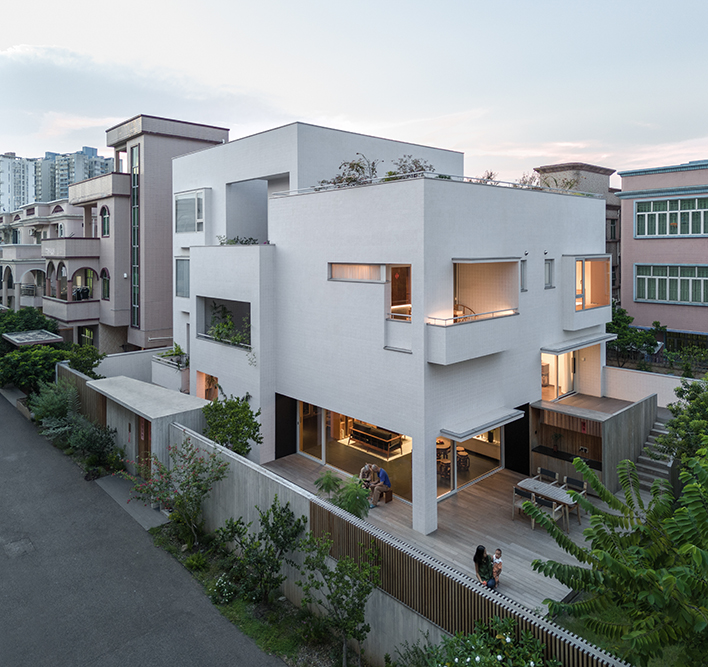
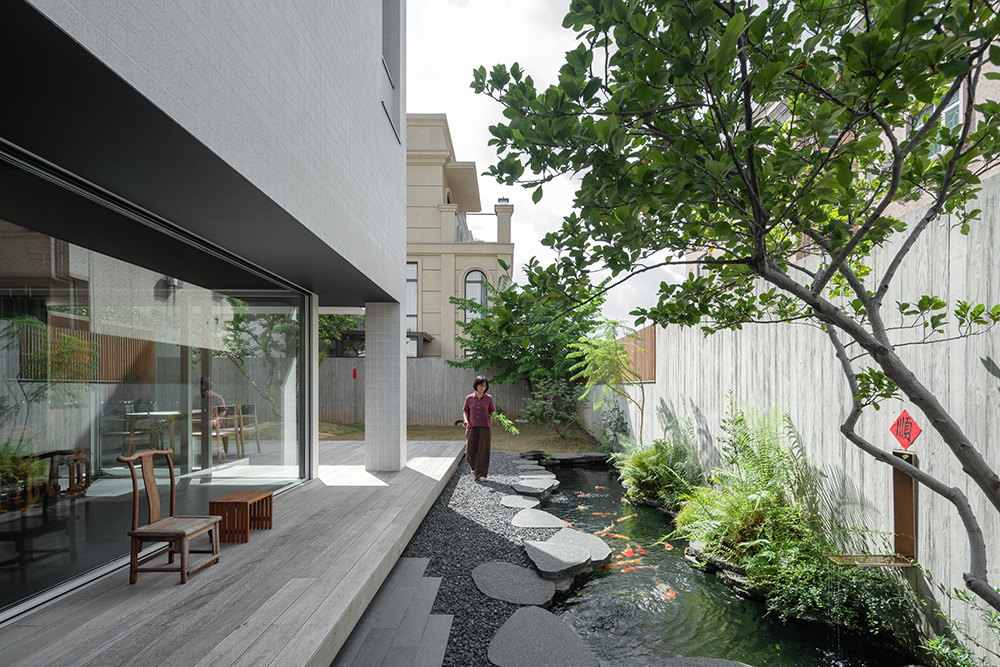
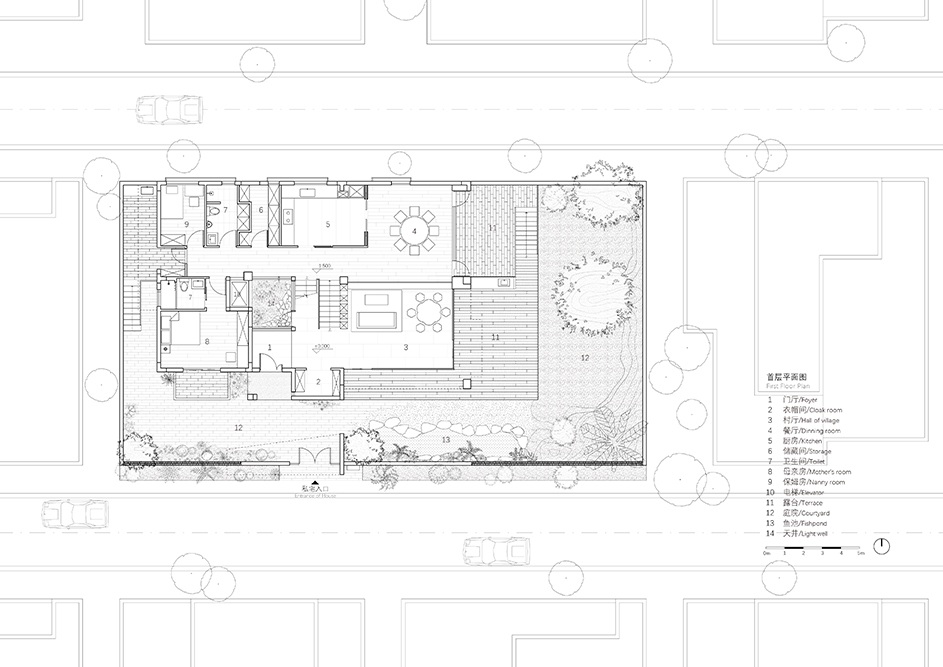
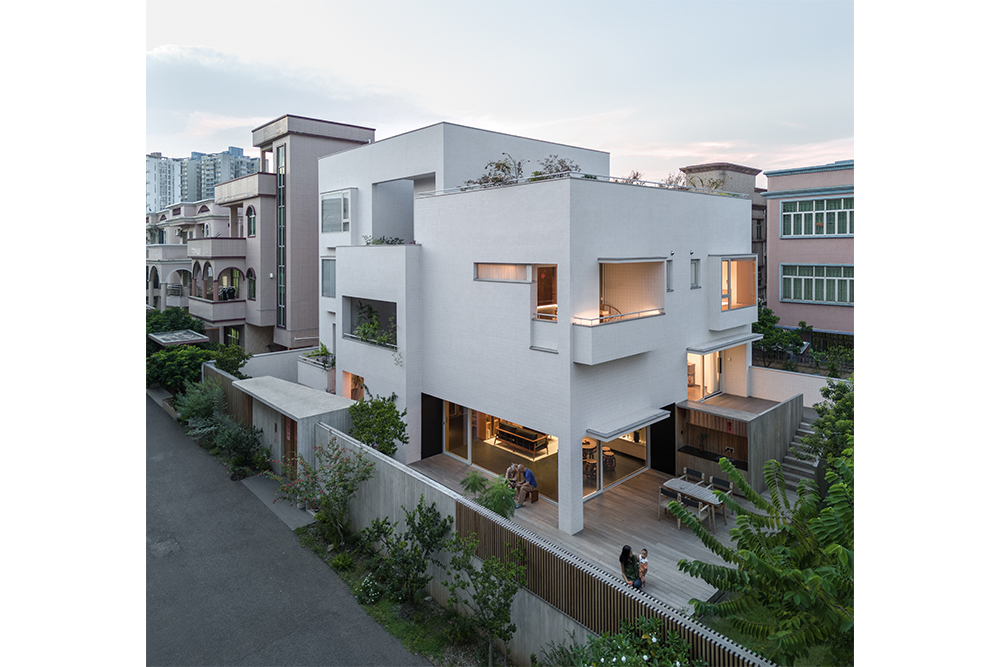
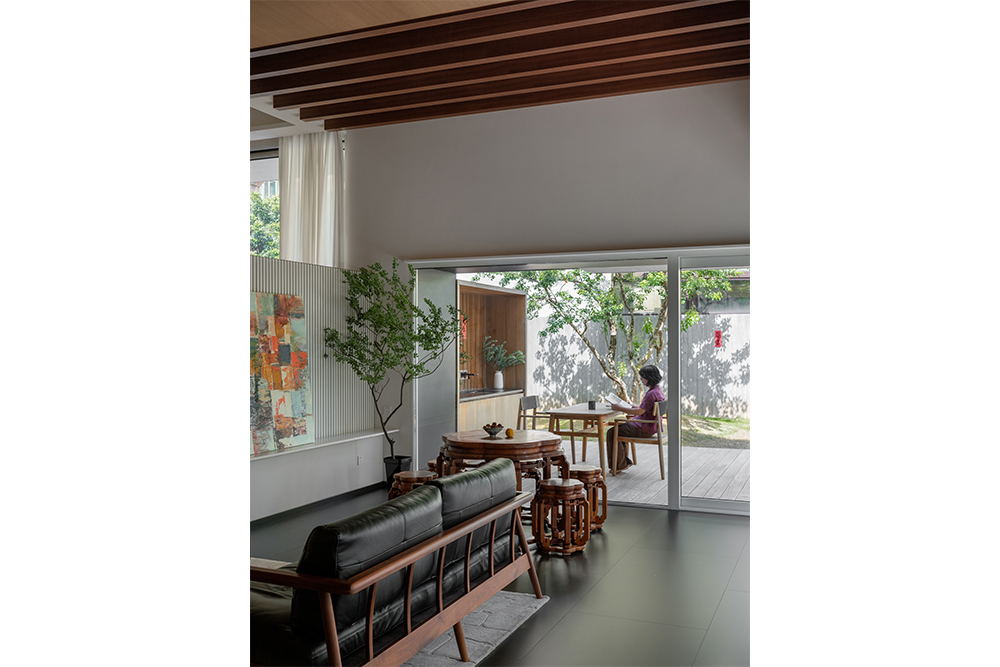
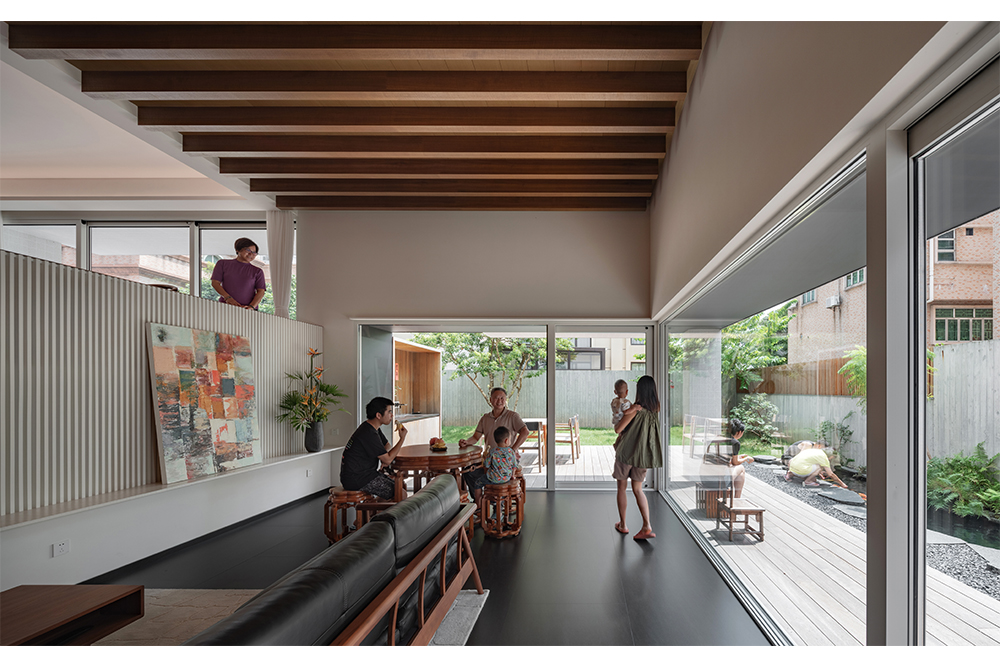
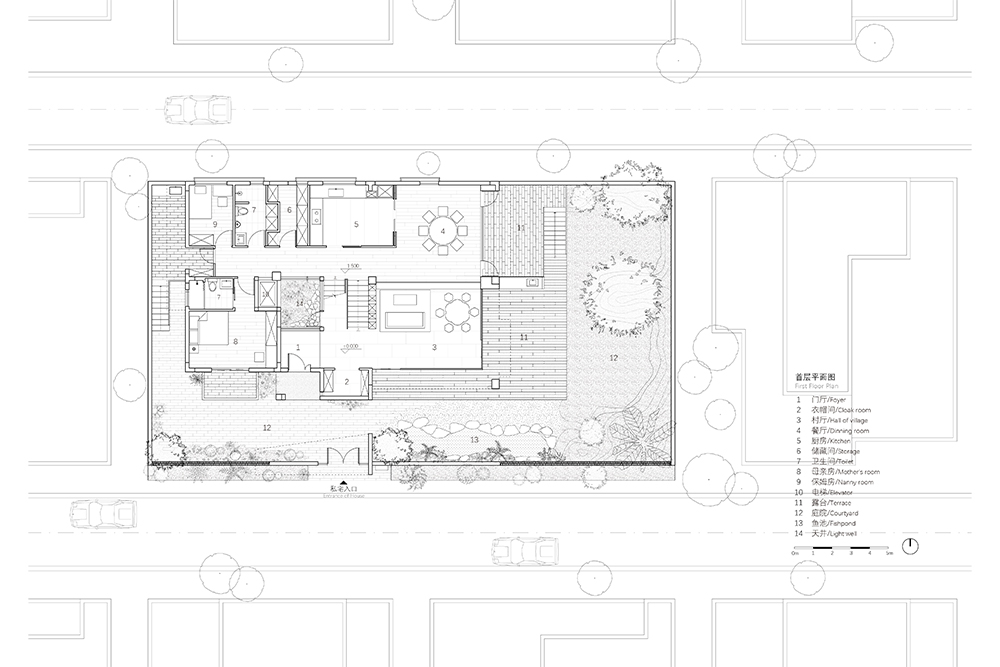
改造前的一楼为架空车库,客厅在二层,与庭院关系割裂。新的剖面关系中,布置在一楼的“村厅”与庭院成为业主与同村村民社交聚会的场所。与此同时,我们还通过建筑和室内的设计手法使村厅与庭院更加公共开放。不仅围墙和大门采用镂空开放的立面形式,而且“村厅”也放弃了安装窗帘,让大面积的落地玻璃消隐室内外的边界。而布置在三楼的“家厅”和室外露台则成为业主一家人之间更为私密的共享交流空间。

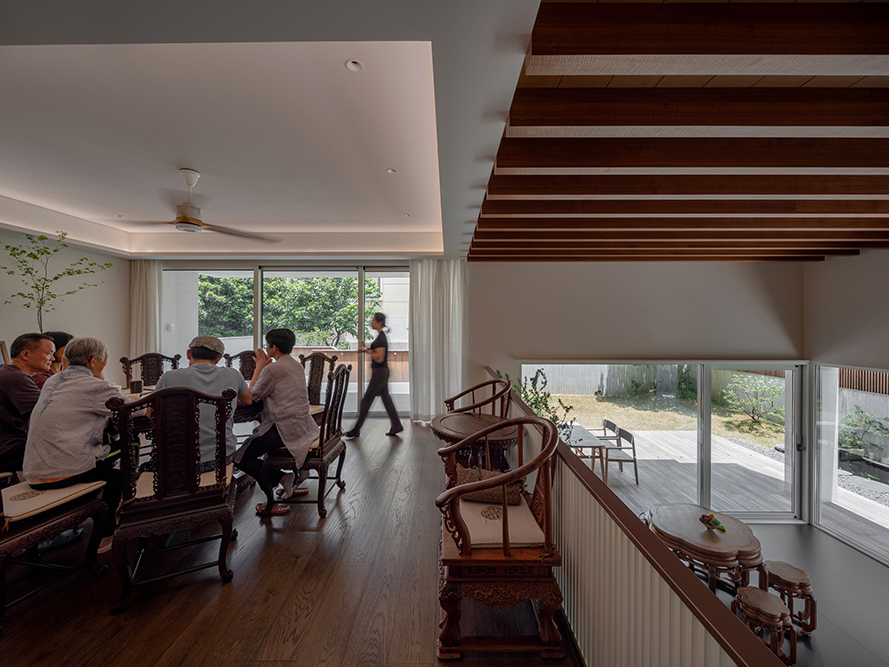
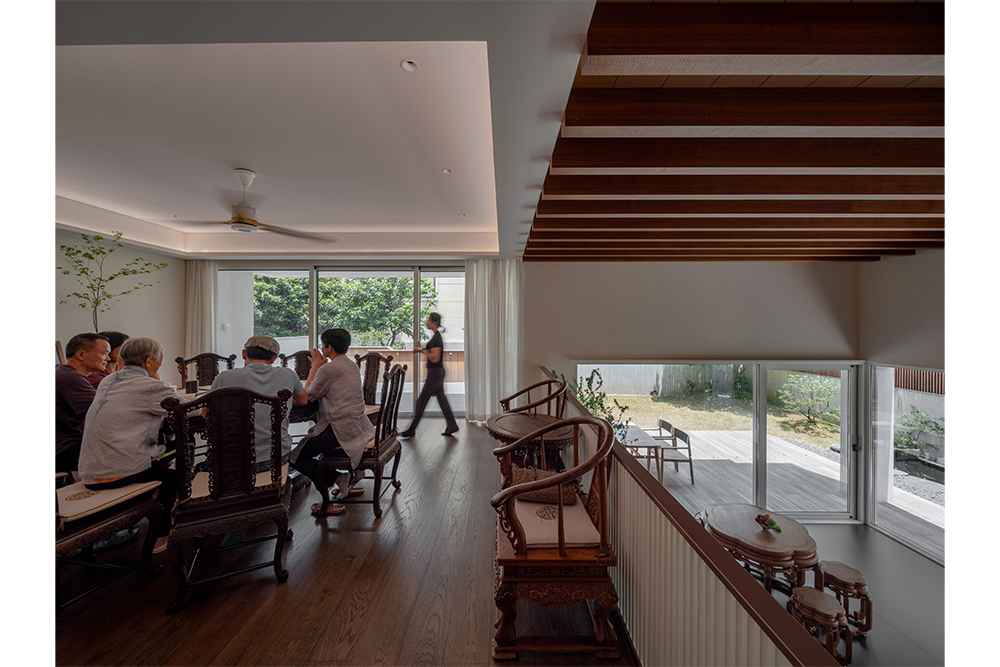
业主的热情好客还体现在常常让客人留下一起吃饭喝茶。因此,餐厅不仅仅是一家人吃饭的地方,也成为了招待亲朋好友的聚会空间。设计把“村厅”做成通高空间,错半层的餐厅与“村厅”形成各自领域感的同时,又有空间上的联系。而“村厅”外压低的檐口为餐厅、“村厅”、入口庭院三者的剖面关系增添了有趣的空间体验。

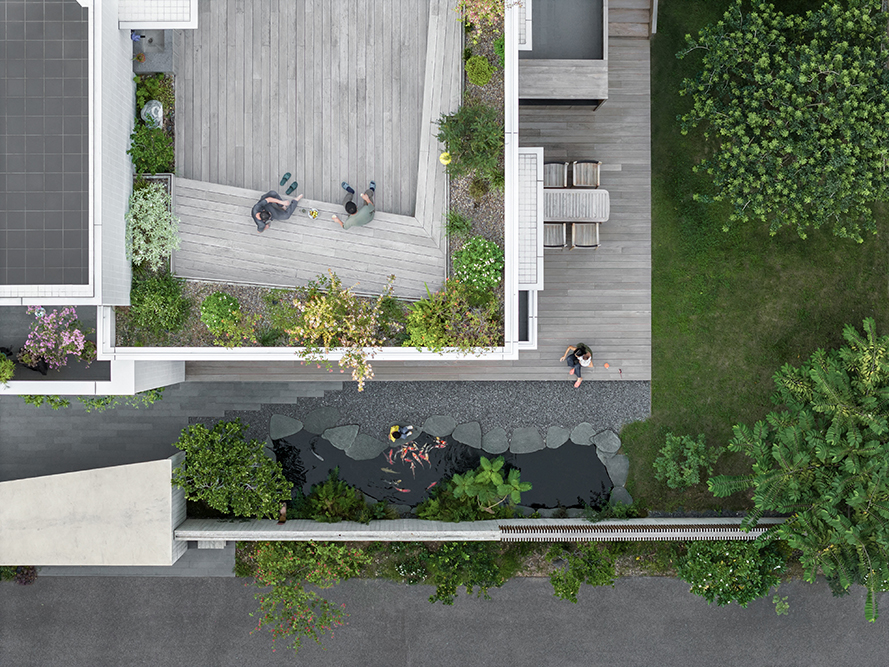
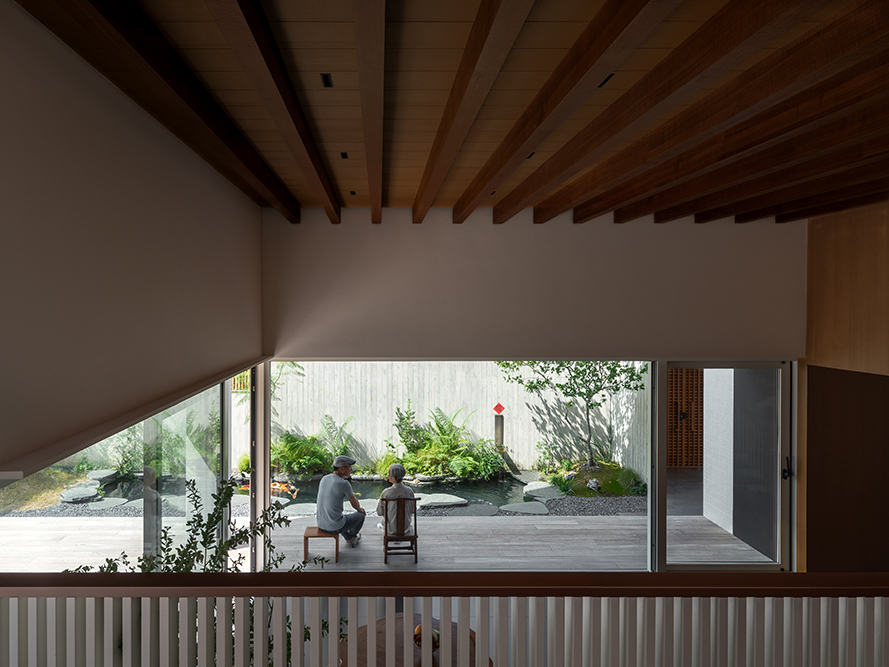
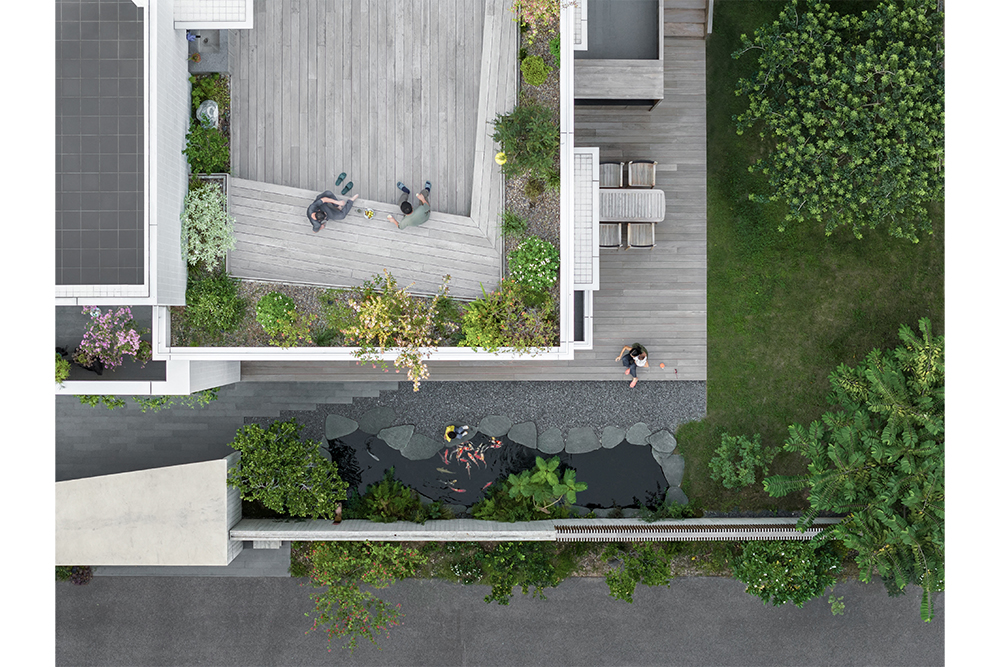
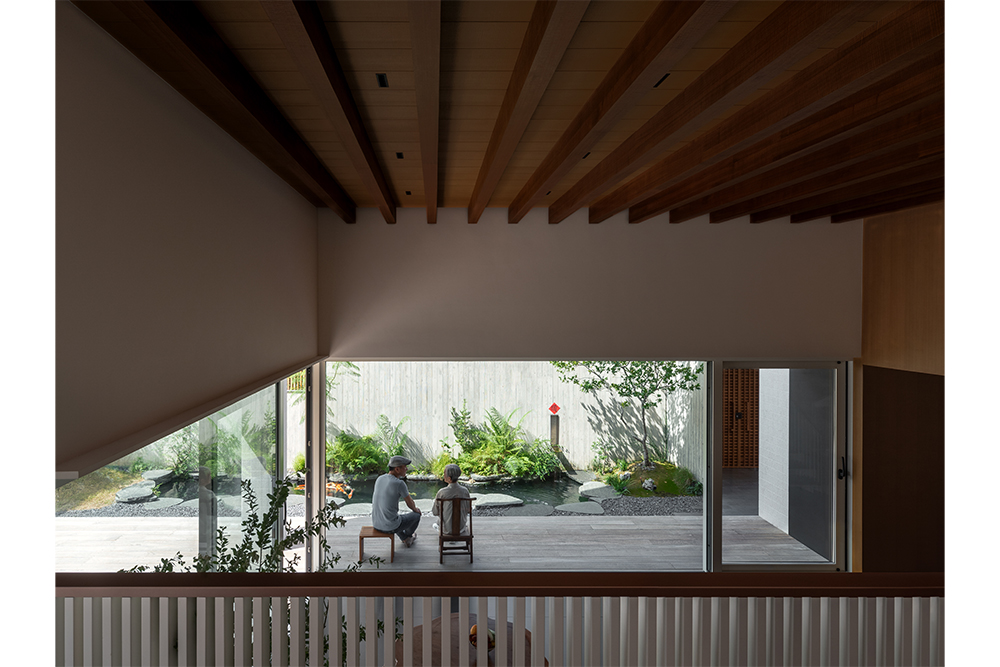
在考虑“村厅”和“家厅”的景观设计时,每个室外的场景都对应着不同的生活使用方式。“村厅”南侧的入口庭院中,锦鲤池成为聚会交流时重要的连接载体。而以草地和小乔木打造的东侧院子则成为小朋友奔跑玩耍的场所。三层的室外露台则为业主的大家庭聚会提供了宽敞的围合式木平台空间以及开阔的视野去观看星空。

 
根植于传统文化的日常生活

过去,沙井人的家中会设神龛,供奉观音和家神。每逢农历初一和十五,会有庄重的上香拜神的仪式。而到了每年的除夕,下午家家户户会开始贴春联、门神,祈祷来年的平安顺遂。即便迁离老屋,这些传统依然延续着。围墙左门边的土地公,入户门上的年红与门神,和谐融入宅院的肌理中,寄托着业主对幸福生活的美好祈愿。

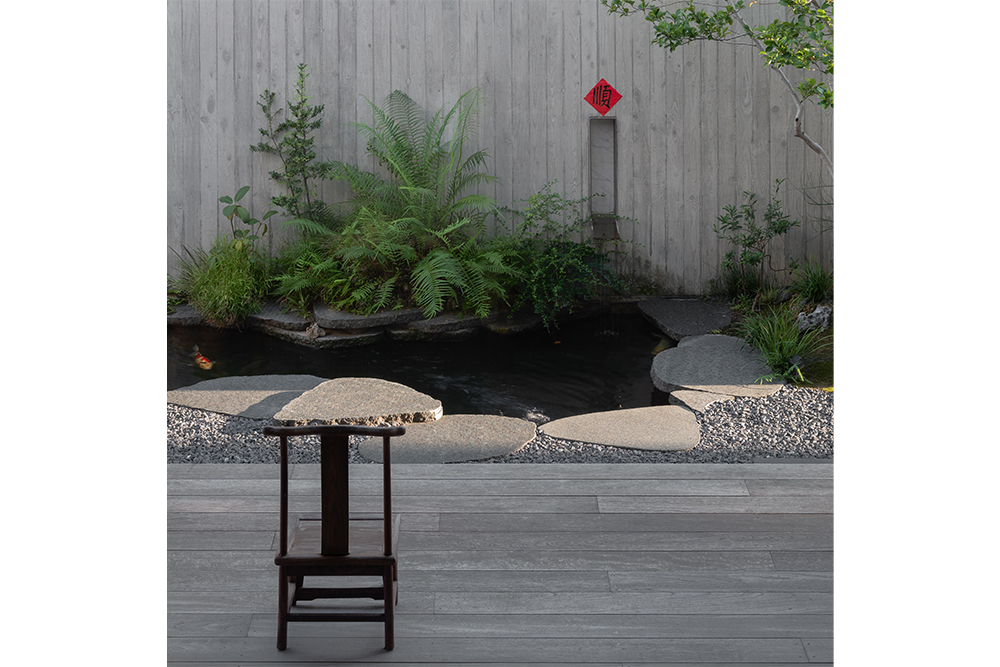
城市化后的沙井,村民不再靠耕种谋生,但仍爱在院子里种果树,享受丰收摘果的喜悦;也喜欢在家里养锦鲤,寓意财旺福寿。内缩的“村厅”提供了遮阳挡雨的檐廊,室内外空间的延伸使入口庭院和东侧院子成为日常生活的重要场所。在四世同堂的日常里,老人陪曾孙在庭院里喂食锦鲤,女主人和儿媳妇在院子里带娃聊天,男主人则在院子里修剪果树。

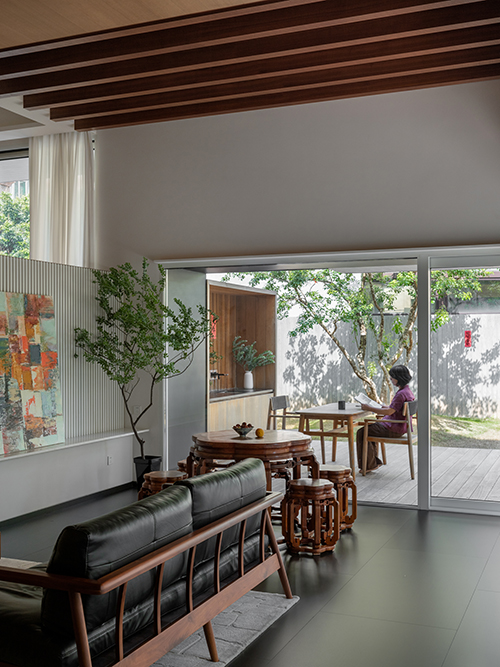
男主人喜爱传统的明清款式的家具,而在设计之初,业主也明确改造后还是大部分沿用之前使用的老家具。所以室内的空间设计要为原有的明清款式的家具提供和谐的搭配,并且新增的家具也要与老家具自然交融,互相映衬。

 
回应岭南气候和传统文化的天井

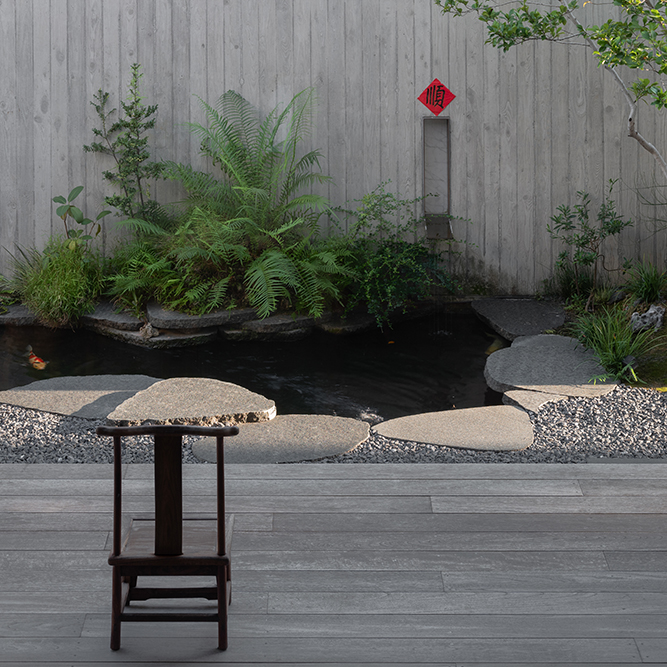
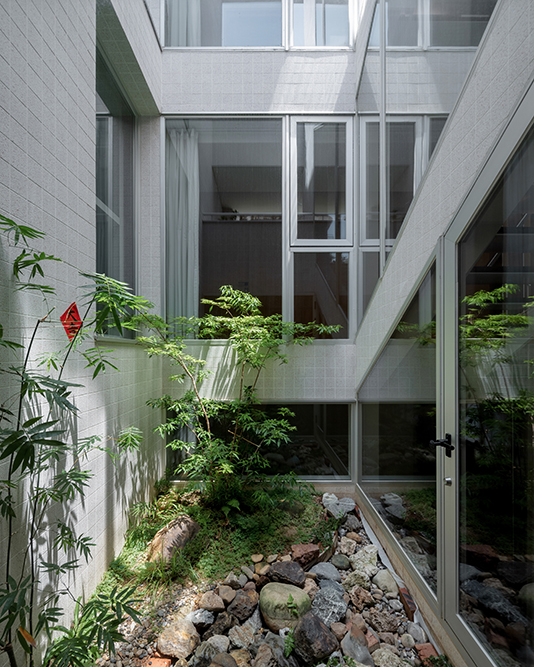
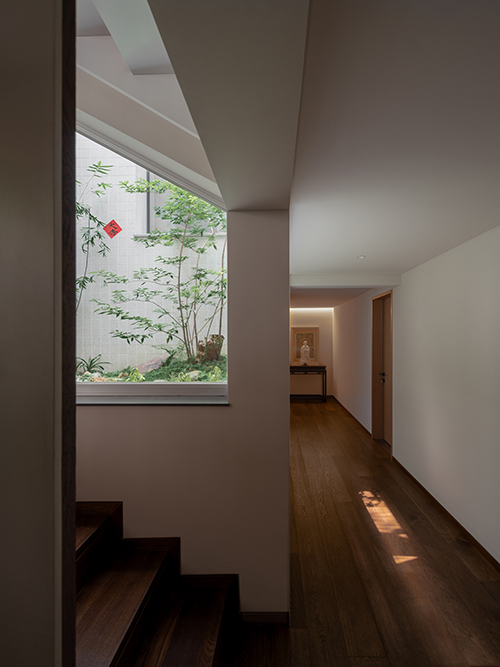
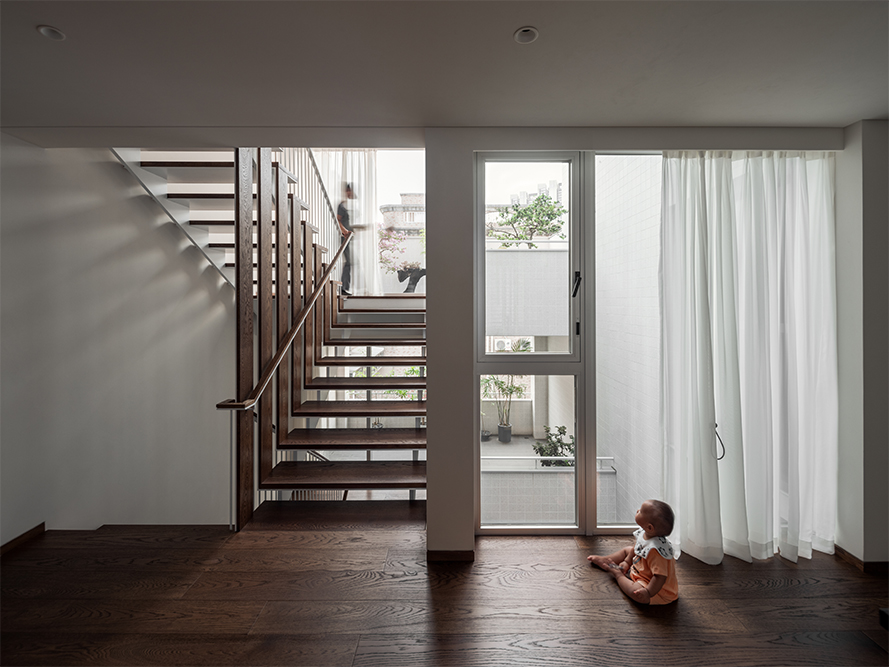
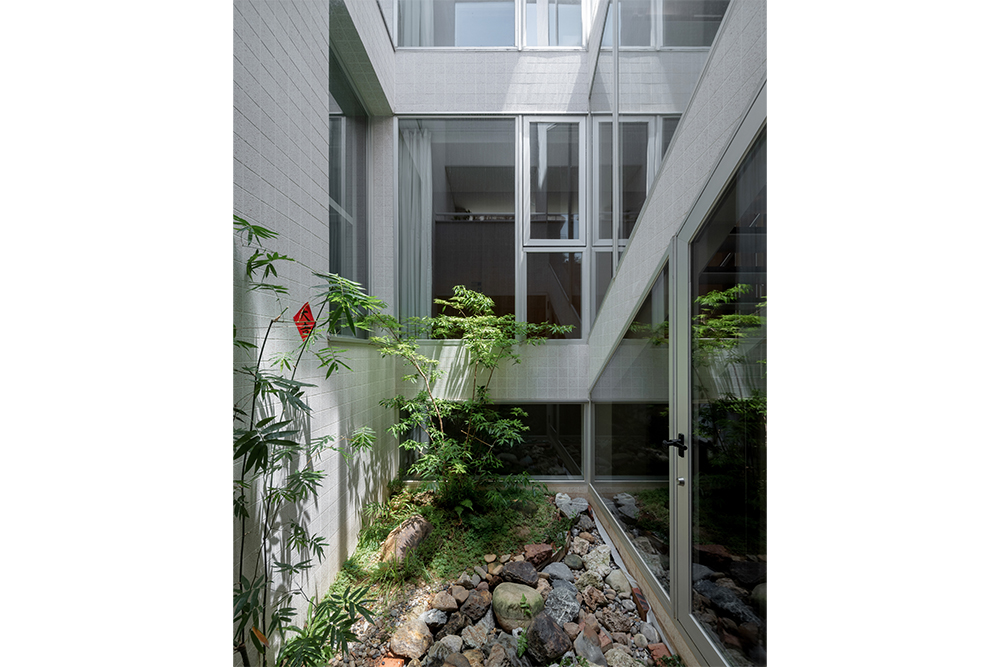
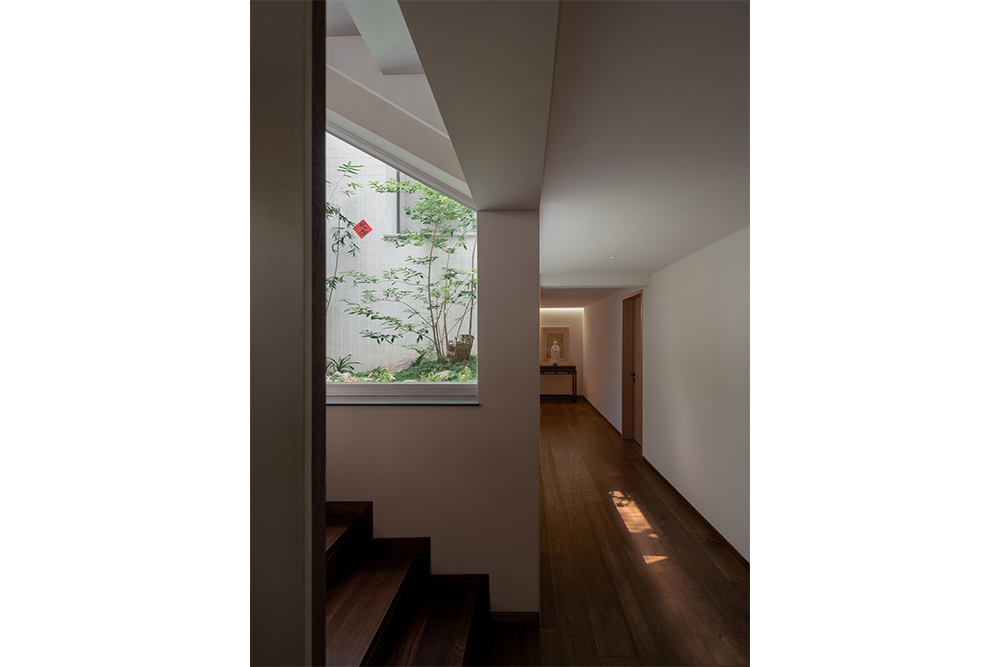
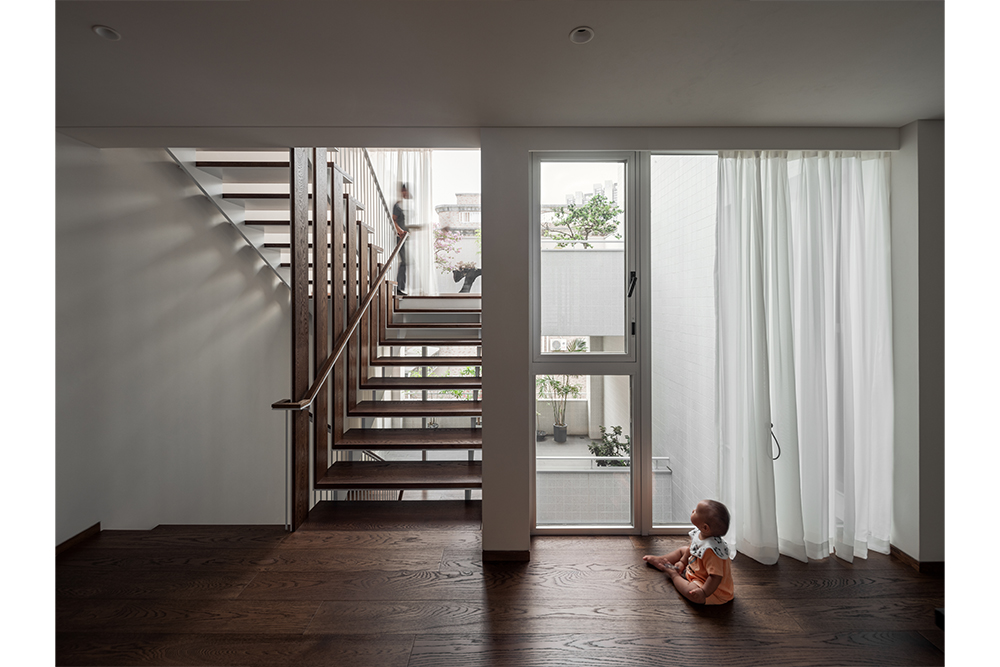
沙井传统老宅里的天井不只是提供通风采光作用,而且是寓意聚财、通天、家和、兴旺。设计把天井的位置布置在楼梯和走廊旁,为行走的人提供了舒适的空间体验。天井南侧的二楼和三楼是室外露台,让天井实现更多的空气流动。而天井的底部也成为女主人的另外一个庭院作品。庭院里铺设的石头,是她在西南地区旅游收集回来的石头,承载着旅途的记忆。每当新的客人进屋,女主人都先娓娓道来她这个庭院作品的故事。


Observational design approach
In the initial schIn the initial scheme of the renovation design, the focus was on functionality. On one hand, it emphasized the relationship between the public areas and the courtyard; on the other hand, it outlined a simple site plan showing the relationships between the bedrooms, courtyard, public areas, and the garden. After several discussions, the client agreed with the core strategy of strengthening the relationship between people's lives and the courtyard. However, they wanted us to better respond to their actual living habits, ensuring that all spatial designs aligned with their needs and usage patterns. Therefore, we paid more attention to listening to and recording the client's lifestyle, using an observational approach to the design. For us, this homestead renovation was not a spatial experiment showcasing architectural skills. Our goal was not for the homeowners to adapt to our pre-set lifestyle, but rather for the house to naturally integrate into their daily lives.
 
Continuing the cultural lineage of the village collective 
The new village's layout is uniform and orderly, with each homestead land facing south, and each household has a complete wall defining its private space. Each house also has a small entrance courtyard. In this efficiency-driven, seemingly impersonal planned space, the boundary walls ironically reflect the village's collective cultural heritage. The walls become a showcase of each family's daily life and culture. Outside the walls, due to different preferences, some raise poultry, while others plant fruit trees. What they all share is a commitment to preserving traditional customs, not only by pasting red decorations at the entrance but also by placing a shrine to the Earth God on the left front of the house. The homeowner is a gardening enthusiast, so we designed the area outside the wall to be left blank, allowing her to create her own little haven. This narrow patch of greenery not only showcases her hobbies and aesthetic sense, but her daily care for the plants also becomes an opportunity to chat and exchange pleasantries with neighbors.
In addition, the exterior walls of all the houses in the new village are uniformly made of 10*10cm ceramic tiles, mainly in pink and earthy yellow. To echo the surrounding environment, the exterior wall material also follows the 10×10cm specification, but instead of regular ceramic tiles, precast terrazzo mixed with pink pebbles was chosen. The use of white cement in the precast terrazzo creates a natural transition in material color between the building and the interior. At the same time, the pink pebbles also give the building a slightly pinkish base color, showcasing rich material details at a close-up scale.

Hall of village and living room
The homeowner is warm and hospitable, and is very popular among the villagers. Whenever we discuss the design scheme in his living room, neighbors often drop by for a cup of tea and a chat. These visits aren't formal, but rather a casual and relaxed part of daily life. Furthermore, we observed that ancestral halls in the old village have gradually become deserted with the changing times, with fewer villagers going there for socializing. Instead, the living rooms of respected and well-liked villagers have become the new social spaces. This led us to an idea: to create a "hall of village" with public social functions on the homestead land, in response to the changing social spaces and methods of villagers in this era of transformation.
Before the renovation, the first floor was an elevated garage, with the living room on the second floor, disconnected from the courtyard. In the new layout, the "hall of village" on the first floor and the courtyard become a social gathering place for the homeowner and fellow villagers. Meanwhile, we also adopt architectural and interior design techniques to make the "hall of village" and courtyard more public and open. Not only were the walls and gates designed with openwork facades, but curtains were also omitted from the "hall of village," allowing large floor-to-ceiling windows to blur the boundary between indoors and outdoors.  The living room on the third floor and the outdoor terrace become more private shared spaces for communication among the homeowner's family.
The homeowner's hospitality is also evident in their frequent invitations for guests to stay for meals and tea. Therefore, the dining room is not only a place for family meals but also a gathering space for friends and relatives. The design creates a double-height space in the "hall of village," with the staggered dining room and "hall of village" each possessing a sense of territory while maintaining a spatial connection. The lowered eaves outside the " hall of village " add an interesting spatial experience to the cross-sectional relationship between the dining room, the " hall of village," and the entrance courtyard.
When considering the landscape design of the "hall of village" and "living room," each outdoor scene corresponds to a different lifestyle. In the entrance courtyard on the south side of the " hall of village," the koi pond serves as an important connecting element for gatherings and conversations. The east courtyard of the " hall of village," with its lawns and small trees, becomes a playground for children to run and play. The third-floor outdoor terrace provides a spacious, enclosed wooden platform for the owners' large family gatherings, offering an unobstructed view of the starry sky.
 
Daily life rooted in traditional culture
In the past, residents of Shajing would have shrines in their homes to worship Guanyin and household gods. On the first and fifteenth of each lunar month, solemn ceremonies would be held to offer incense and pray to the gods. On New Year's Eve, in the afternoon, every household would begin pasting Spring Festival couplets and door gods, praying for peace and prosperity in the coming year. Even after moving away from their old homes, these traditions continued. The shrine of the Earth God on the left side of the wall, the red New Year's decorations and door gods on the entrance door, all blend harmoniously into the fabric of the courtyard, embodying the homeowners' heartfelt wishes for a happy life.
In Shajing, after urbanization, villagers no longer rely on farming for a living, but they still love to plant fruit trees in their yards and enjoy the joy of harvesting fruit; they also like to keep koi fish at home, symbolizing wealth, fortune, and longevity. The recessed "hall of village" provides a covered walkway for shade and shelter from the rain, and the extension of indoor and outdoor spaces makes the entrance courtyard and the east courtyard important places for daily life. In the daily life of four generations living together, the elderly accompany their great-grandchildren to feed the koi fish in the courtyard, the lady of the house and her daughter-in-law chat and take care of the children in the courtyard, and the husband prunes the fruit trees in the courtyard.
The male homeowner loves traditional Ming and Qing dynasty style furniture, and from the initial design stage, the owner made it clear that most of the old furniture would be reused after the renovation. Therefore, the interior space design needed to provide a harmonious match with the existing Ming and Qing dynasty style furniture, and the newly added furniture should also blend naturally with the old furniture, complementing each other.In Shajing, after urbanization, villagers no longer rely on farming for a living, but they still love to plant fruit trees in their yards and enjoy the joy of harvesting fruit; they also like to keep koi fish at home, symbolizing wealth, fortune, and longevity. The recessed "hall of village" provides a covered walkway for shade and shelter from the rain, and the extension of indoor and outdoor spaces makes the entrance courtyard and the east courtyard important places for daily life. In the daily life of four generations living together, the elderly accompany their great-grandchildren to feed the koi fish in the courtyard, the lady of the house and her daughter-in-law chat and take care of the children in the courtyard, and the husband prunes the fruit trees in the courtyard.

Light well that responds to the climate and traditional culture of Lingnan
In traditional old houses in Shajing, the light well not only provides ventilation and lighting but also symbolizes wealth accumulation, connection to the god, family harmony, and prosperity. The design places the light well next to the stairs and corridors, providing a comfortable space for those walking through. The second and third floors on the south side of the light well are outdoor terraces, allowing for greater air circulation. The base of the light well also becomes another courtyard design by the homeowner. The stones paving the courtyard were collected during her travels in Southwest China, carrying memories of her journeys. Whenever new guests enter the house, the homeowner first tells them the story behind this courtyard design.

项目名称:深圳沙井“宅基地”改造
功能:住宅
项目地址:深圳市宝安区
完成年份:2024
建筑面积:600㎡
主持建筑师:曾冠生
设计团队:陈春建 林白 罗文国 傅艺玲 李智丰
摄影:张超

Project name: Renovation of “Homestead Land” in Shenzhen Shajing
Category: Residential
Project location: Baoan District, Shenzhen
Completion Year: 2024
Area: 600㎡
Principal Architect: Guansheng Zeng
Design team: Chunjian Chen,Bai Lin,Wenguo Luo,Yiling Fu, Zhifeng Li
Photo credits: Chao Zhang